Thursday, 30 October 2025

Impeccable vs. Pedantic: The Fine Line Between Excellence and Excess

To be impeccable is to strive for excellence. It means doing something with care, integrity, and precision—whether it’s writing a report, preparing a meal, or keeping a promise. Impeccability reflects high standards without obsession; it’s about doing one’s best and leaving no room for avoidable faults.

Pedantic, on the other hand, describes a different kind of attention to detail—one that values correctness above purpose. The pedantic person focuses so closely on minor rules and technicalities that the bigger picture can be lost. For example, correcting someone’s grammar during a heartfelt conversation may be accurate, but it can also miss the moment’s meaning.

The difference lies in intention and balance. Impeccability seeks clarity, quality, and truth; pedantry seeks control and superiority. The impeccable person inspires trust and respect because their standards uplift others. The pedant often frustrates or alienates, because their precision serves the self more than the task.

In short, impeccability is excellence with grace; pedantry is precision without empathy. Knowing the difference helps us aim high without losing sight of what really matters—connection, understanding, and purpose.

Tuesday, 10 September 2024

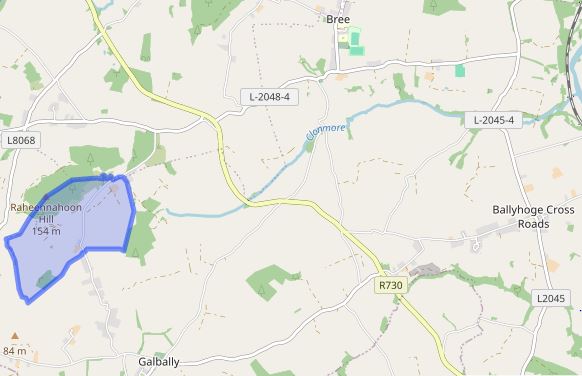
Raheennahoon, County Wexford, Ireland and Surrounding area in the 1800s Gallbally and Whitechurch, neighboring areas to Raheennahoon in County Wexford.


Raheennahoon, County Wexford, Ireland and Surrounding area in the 1800s Gallbally and Whitechurch, neighboring areas to Raheennahoon in County Wexford.
 

 Contributed By Philip J. O'Rourke 

 Gallbally and Whitechurch, neighbouring areas to Raheennahoon in County Wexford, share a similar history during the 19th century. These small rural townlands experienced the same economic, social, and political challenges that characterized much of rural Ireland during this period. Historical Overview: Gallbally and Whitechurch in the 1800s 

 1. "Agricultural Life and Tenant Farming" - Like Raheennahoon, both Gallbally and Whitechurch were predominantly agricultural communities in the 1800s. Tenant farming was the primary economic activity, with most families relying on small plots of land for subsistence farming. - Tenants in both areas would have been under the control of landlords, often absentee landlords, who collected rent but played little role in the day-to-day management of the land. - The common crops were potatoes, oats, barley, and wheat, alongside livestock like cattle, sheep, and pigs. Due to the relatively small plots of land and the intense pressure to produce food for both rent and survival, the potato was a staple food, which would have made these areas particularly vulnerable to the potato blight and subsequent Famine. 

 2. "The Great Famine (1845–1852)" - Both Gallbally and Whitechurch were hit hard by the Great Famine, just as the rest of County Wexford. The dependence on the potato crop meant that when the blight arrived in 1845, the entire rural community was devastated. The Famine caused a severe loss of life, disease, and forced emigration. - Relief efforts, such as soup kitchens and workhouses, were overwhelmed, and many people from Gallbally and Whitechurch would have been forced into the workhouses. The Wexford workhouse, in the nearby town of Wexford, saw overcrowding, disease, and extremely harsh conditions. - After the Famine, emigration was a common solution for families who could not recover economically. Many emigrated to the United States, Canada, or Britain in search of a better life, just as in Raheennahoon. 

 3. "Landlords and Estates" - Land ownership in Gallbally and Whitechurch followed the same patterns as in much of Ireland. The land was owned by Protestant landlords, who often lived outside of Ireland and managed the estates through agents. Common absentee landlords in Wexford included families with ties to the Anglo-Irish aristocracy or gentry. - The landlord-tenant relationship was often tense, with tenants forced to pay high rents. In the years after the Famine, many families struggled to pay rent, leading to evictions and increased poverty. 

 4. Land War and Agrarian Reform" - By the late 1800s, Gallbally and Whitechurch were caught up in the larger Land War movement that was sweeping across rural Ireland. Tenant farmers demanded fair rents, fixity of tenure, and, eventually, the right to own the land they worked. The "Irish National Land League", founded in 1879, played a central role in organizing tenants and pushing for land reforms. - In these areas, families who had suffered through the Famine and the harsh conditions of tenant farming began to see some hope for change. The "Land Acts" passed in the late 1800s allowed many tenants to purchase their land from landlords, marking the beginning of a more stable future for the rural communities in Gallbally and Whitechurch. - The "Ashbourne Act" of 1885, for example, allowed tenants to buy their holdings with government loans, gradually reducing the power of landlords and giving tenant farmers more autonomy. 

 5. "Catholic Church and Parish Life" - Religion and the Catholic Church were central to life in Gallbally and Whitechurch, as in most rural Irish communities. After "Catholic Emancipation" in 1829, the church was able to exert more influence in public life. Catholic churches in nearby villages or parishes like Whitechurch provided social and religious structure, acting as hubs for education, charity, and community gatherings. - Parish records would have kept track of baptisms, marriages, and deaths, giving insight into the families who lived in Gallbally and Whitechurch. The "parish of Whitechurch-Glynn", part of the Diocese of Ferns, would have included these townlands and recorded the names of families who resided there. 

 Common Family Names in Gallbally and Whitechurch 
 The families in Gallbally and Whitechurch were likely to share similar surnames with those in Raheennahoon and Bree. Some of the common family names from the wider Bree area, often appearing in Griffith's Valuation, the Tithe Applotment Books, and parish records, include: 

 1. "Murphy" - As with Raheennahoon, "Murphy" was one of the most common surnames in Gallbally and Whitechurch. They were typically tenant farmers, and many may have emigrated during or after the Famine. 

 2. "Doyle" - The "Doyles" were another prevalent family name in Wexford, including in Gallbally and Whitechurch. Many Doyles were small farmers or laborers, working the land or serving the larger estates. 

 3. "Byrne" - "Byrne" is a common Gaelic name that would have been widespread in this area. Byrnes in Gallbally and Whitechurch likely worked as tenant farmers, and some of their descendants would have benefitted from land reforms later in the 19th century. 

 4. "Whitmore" - "Whitmore" is a name more associated with landed Protestant families in Wexford. The Whitmores may have had ties to local estates, though the tenant population was primarily Catholic. 

 5. "Redmond" - The "Redmond** family, prominent in Wexford, might have had relatives in Gallbally and Whitechurch. Many Redmonds in this period were farmers, though the Redmond family produced some notable figures involved in Irish nationalism and politics. 

 6. "Kehoe" - The "Kehoes" were another significant Wexford family, common across the county, including Gallbally and Whitechurch. Like the others, Kehoes would have been heavily impacted by the Famine, and some members likely emigrated during the 1840s and 1850s. 

 7. "Roche" - The "Roche" family was another important surname in County Wexford. Similar to other families in the region, they were primarily tenant farmers, some of whom likely took part in agrarian agitation during the Land War. 

 Social and Economic Changes in the Late 1800s

By the end of the 19th century, life in Gallbally and Whitechurch began to stabilize after decades of hardship. "Land reforms" enabled many families to own their land, and while emigration continued, the economic conditions in rural Wexford slowly improved. Families who had been tenants for generations were now able to purchase their land, resulting in a more secure future. 

 The Role of Emigration

Much like the rest of rural Ireland, emigration was a major factor in shaping the history of Gallbally and Whitechurch during the 19th century. From the Famine onwards, emigration was often seen as the only viable option for survival, particularly for younger people. These emigrants helped shape the Irish diaspora in the United States, Canada, Australia, and the UK. Their remittances sent back to family members often kept struggling relatives afloat. 

 Conclusions 

Gallbally and Whitechurch, like many small rural communities in County Wexford, were deeply affected by the socio-economic and political forces that shaped Ireland during the 1800s. From the devastation of the Great Famine to the struggles of tenant farmers for land rights, these areas faced many challenges. However, they also saw gradual improvements through land reforms and the eventual stabilization of the rural economy. The family names common in the region, like Murphy, Doyle, Byrne, and Redmond, would have played central roles in this history, with many of their descendants continuing to live in the area or having emigrated to new opportunities abroad.

#Genealogy #IrishHistory #Wexford

Wednesday, 1 September 2021

Horse of the Dead.

Horse of the Dead 


I included a bit of the street rather than cropping it out. I wanted to suggest a destination for the galloping horse, Escaping from the world of the dead into the world of realm of the living. 

I believe the name of the artist is Key Rogue.

Saturday, 28 August 2021

Zumba Saturday in Limerick


Whilst in town today I came across a group of Zumba students strutting their stuff. They were inviting members of the public to join in, some did. I most admit, I would loved to join in myself except for having some leg problems at the moment. I very much-loved the spirit that it brought to my day after the lock down and self isolation of the previous eighteen months. I am grateful to those wonderful folk who, "Strutted their stuff" today.

Sunday, 15 August 2021

Service with a Smile


 George Russell, Corcoran's Family Butcher. John's Square.

I took this approximately six years but mislaid the file. George is one of life's gentlemen, always ready with a kind word and a smile.


A Man and his Accordion.


85-year-old Limerick Street Musician and Poet, Tom McNamara


Saturday, 27 March 2021

Small Tortoiseshell


Lavender is great for attracting Bees and Butterflies.

#nature #naturalhistory #butterflies #lavender #cannon #handheld #limerick #ireland #macro


Saturday, 8 March 2014

These Things I Know


I recently came across this poem in a talk by Boyd K. Packer. I was so touched by it that I felt compelled to share it.


I reached the age of 68. I felt impressed to start what I called an “Unfinished Composition.” The first part of that work goes like this:


I had a thought the other night,

A thought profound and deep.

It came when I was too worn down,

Too tired to go to sleep.

I’d had a very busy day

And pondered on my fate.

The thought was this:

When I was young, I wasn’t 68!

I could walk without a limp;

I had no shoulder pain.

I could read a line through twice

And quote it back again.

I could work for endless hours

And hardly stop to breathe.

And things that now I cannot do

I mastered then with ease.

If I could now turn back the years,

If that were mine to choose,

I would not barter age for youth,

I’d have too much to lose.

I am quite content to move ahead,

To yield my youth, however grand.

The thing I’d lose if I went back

Is what I understand.

Ten years later, I decided to add a few more lines to that poem:

Ten years have flown to who knows where

And with them much of pain.

A metal hip erased my limp;

I walk quite straight again.

Another plate holds neck bones fast--

A wonderful creation!

It backed my polio away;

I’ve joined the stiff-necked generation.

The signs of aging can be seen.

Those things will not get better.

The only thing that grows in strength

With me is my forgetter.

You ask, “Do I remember you?”

Of course, you’re much the same.

Now don’t go getting all upset

If I can’t recall your name.

I would agree I’ve learned some things

I did not want to know,

But age has brought those precious truths

That make the spirit grow.

Of all the blessings that have come,

The best thing in my life

Is the companionship and comfort

I get from my dear wife.

Our children all have married well,

With families of their own,

With children and grandchildren,

How soon they all have grown.

I have not changed my mind one bit

About regaining youth.

We’re meant to age, for with it

Comes a knowledge of the truth.

You ask, “What will the future bring?

Just what will be my fate?”

I’ll go along and not complain.

Ask when I’m 88!

And last year I added these lines:

And now you see I’m 88.

The years have flown so fast.

I walked, I limped, I held a cane,

And now I ride at last.

I take a nap now and again,

But priesthood power remains.

For all the physical things I lack

There are great spiritual gains.

I have traveled the world a million miles

And another million too.

And with the help of satellites,

My journeys are not through.

I now can say with all certainty

That I know and love the Lord.

I can testify with them of old

As I preach His holy word.

I know what He felt in Gethsemane

Is too much to comprehend.

I know He did it all for us;

We have no greater Friend.

I know that He will come anew

With power and in glory.

I know I will see Him once again

At the end of my life’s story.

I’ll kneel before His wounded feet;

I’ll feel His Spirit glow.

My whispering, quivering voice will say,

“My Lord, my God, I know.”

Friday, 17 January 2014

There is No Royal Road!


“There is no royal road to any learning, no matter what it is. There is no royal road to any righteous living, no matter who you are or where you are. There is no royal road to anything that is worth while. Nothing that is deserving of earning or of cherishing comes except through hard work. I care not how much of a genius you may be, the rule will still hold.”

— J. Reuben Clark, Jr.

Thursday, 11 April 2013

Cork City - Home of the Happy Man


Nearly every major event of my early life took place in close proximity to the River Lee.  It used to even visit our home :-)

-

Thursday, 13 December 2012

Hidden Deep Within

Hidden deep within each of us, totally uninfluenced by circumstances, is that little core of happiness. Find that and you find power beyond your dreams - PiperHawk


Friday, 9 November 2012

Honour and Divinity

Honour, integrity and moral courage make up the qualities which add divinity to our lives.

Monday, 26 December 2011

'Molly Chamberpots' and The Wren Boys


My earliest memories of St Steven's day would certainly include the 'wren' or  'wran' boys coming around to the doors of the houses early in the morning. You would first hear them at the neighbouring houses, getting louder and louder until the racket would arrive at our door. I call it a racket because they would beat out the time of the song on the front door with a large bunch of ivy. The song they sang in my part of Cork was quite often unrecognisable but quite often went like this:

 The wran the wran the king of all birds,
Up in the holly and ivy tree,
Whether its big or whether its small,
Give us a copper and we'll leave ye alone.

Knock at the knocker,
Ring at the bell,
Give us a copper,
For singing so well.


In our lane one house was always avoided, as the woman of the house was well known for emptying the contents of a chamber pot out of the upstairs window over the unwelcome callers. She became known locally as 'Molly Chamberpots'.

Friday, 5 August 2011

Ireland a Living Entity


I see Ireland like a living entity; a mother who provides for her children with all that they need. However, like all petulant children we don't always choose that which is good for us, but instead follow our own whims. We make foolish choices based upon the predatory suggestions of bigger children abroad, then blame each other when everything goes pear shaped. Like the children of any family,  there will be amongst the children of Ireland disagreements and sibling rivalry, there will be fallings-out and even estrangements.

In these turbulent times, we must put an end to the blame and accusations, and putting aside the old discordances of the past, we need to unite in the rebuilding of this nation - this family of Ireland.

I watch in sadness as our leaders spend more time on recrimination than on showing the example of positivity. I watch in frustration the greed of financial speculators, as they try and squeeze the last drop from the tit of our Mother Ireland.  And then I watch in pride the entrepreneurial spirit of  those who, struggling  against great odds in these troubled times, start up businesses and enterprises in the cities, towns, villages and parishes throughout this land.  These men and women are the true heroes of our time.  These men and women are our true leaders.

Ireland is indeed a living entity and I am proud to be one of Her children.

~

Thursday, 28 July 2011

A Woman in My Eyes


Rosa Parks 1913 - 2005


If you were to ask me what my ideal woman would be, it would not take me long to reflect; for my answer would be the same as it would had you asked me about a man. A woman, like a man, is a fellow human being - a person. Therefore, my ideal person is one of honour and courage; a person who is trustworthy and idealistic. While I may have preferences as to physical characteristics, these are secondary and temporary.


When I think of an ideal woman, I think of people like Rosa Parks, who in December of 1955 refused to give up her seat on a Montgomery bus, to make room for a white passenger. I think of a young woman, Anne Frank, who spent two years hiding in an attic, during WWII, before her capture and death in March 1945. Anne´s diary, translated into 67 different languages, has been an inspiration to so many. I think of contralto Marian Anderson, who despite segregation, worked scrubbing steps before finally singing her way out of poverty in South Philadelphia.


I think of the many millions of women around the world, working in factories, shops and offices; in hospitals, hotels and restaurants. I think of those women struggling to bring up families in these difficult times. I think of my own mother, who strove against all the odds to provide me with an education and who instilled in me a love for others.


I find it an insult to our humanity when the advertising, fashion and cosmetic industries, who in the interest of profits, objectify women treat and them like uneducated brainless human accessories. Happily, there are many women who will not allow themselves to be objectified for neither fame nor fortune, but maintan the status of their gender with dignity and pride.